What Are Neurodegenerative Diseases?

As people age, brain function gradually declines due to the death of neurons, leading to neurodegenerative diseases such as Parkinson’s disease, Alzheimer’s disease, and Huntington’s disease.

The prevalence of neurodegenerative diseases is reported to be increasing worldwide with the growing elderly population.

Recent studies have accumulated evidence showing that pathological changes begin and progress gradually even before clear clinical symptoms appear.

Given the characteristics of neurodegenerative diseases, early-stage assessment and continuous monitoring play crucial roles in patient management and clinical decision-making.

Parkinson’s disease
Loss of dopaminergic neurons
Occurrence of motor symptoms such as tremor and rigidity
Observation of cognitive impairment as Parkinson’s disease progresses
In severe cases of Parkinson’s disease, patients are unable to carry out daily activities independently
Alzheimer’s disease
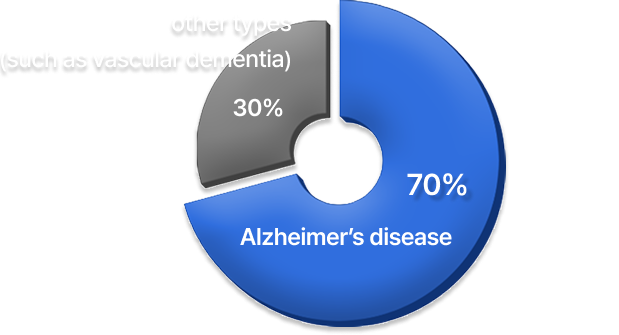
Approximately 70% of dementia (World Health Organization)
As Alzheimer’s disease progresses, atrophy of the medial temporal lobe and cerebral cortex
Cognitive decline occurs as Alzheimer’s disease progresses
As the disease progresses, psychiatric and behavioral symptoms (e.g., personality changes, depression) emerge
Importance of Early Diagnosis

Parkinson's disease and Alzheimer's disease are neurodegenerative diseases for which no therapeutics have yet been
developed that can fundamentally stop or reverse disease progression.
To improve the limitations of existing imaging diagnostic methods, which have constraints in terms of high costs and accessibility of testing, the introduction of diagnostic kits that enable rapid and low-cost result confirmation using only a blood sample is necessary.
With early diagnosis, symptoms can be managed and progression can be slowed.